
CSAD Polyclonal Antibody, Biotin Conjugated
Applications
Reactivity
Predicted Reactivity
| Overview | |
| Catalog # | bs-11822R-Biotin-100uL |
| Product Name | CSAD Polyclonal Antibody, Biotin Conjugated |
| Applications |
WB
ELISA
IHC-P
IHC-F
|
| Reactivity | Mouse, Rat |
| Predicted Reactivity | Human, Dog, Horse |
| Specifications | |
| Conjugation | Biotin |
| Host | Rabbit |
| Source | KLH conjugated synthetic peptide derived from human CSAD |
| Clonality | Polyclonal |
| Isotype | IgG |
| Concentration | 1ug/ul |
| Purification | Purified by Protein A. |
| Storage Buffer | Aqueous buffered solution containing 0.01M TBS (pH 7.4) with 1% BSA, 0.02% Proclin300 and 50% Glycerol. |
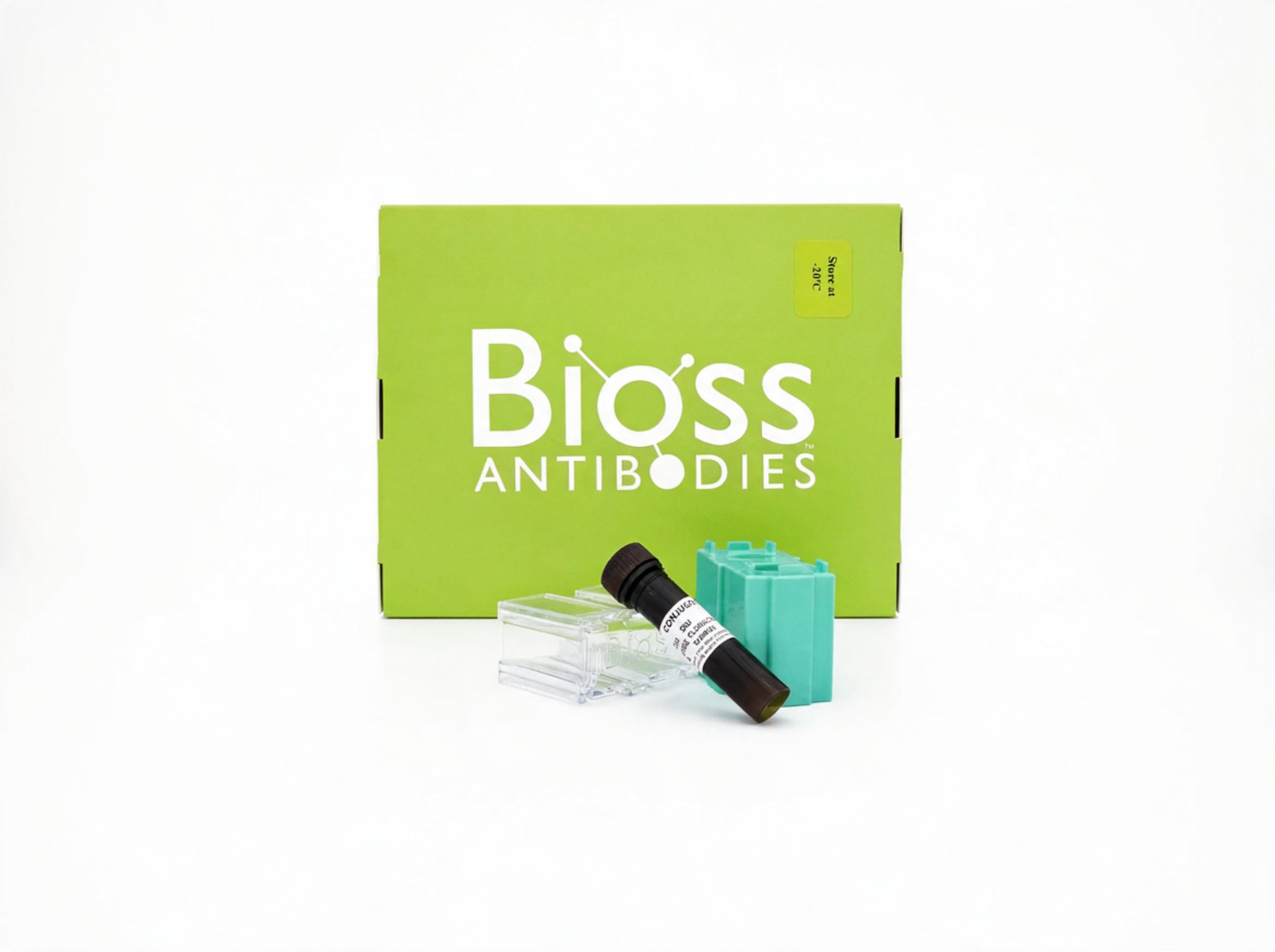
| Storage Condition | Store at -20C for 12 months. |
| Target | |
| Gene ID | 51380 |
| Subcellular location | Cytoplasm, Extracellular matrix |
| Synonyms | CSAD; CSAD_HUMAN; CSD; Cysteine sulfinic acid decarboxylase; Cysteine-sulfinate decarboxylase; Sulfinoalanine decarboxylase. |
| Background | CSAD is a 493 amino acid protein that exists as a homodimer and belongs to the group II decarboxylase family. CSAD catalyzes the conversion of 3-sulfino-L-alanine to hypotaurine and carbon dioxide, binds pyridoxal phosphate as a cofactor and undergoes alternative splicing to produce three isoforms. The gene encoding CSAD maps to human chromosome 12, which encodes over 1,100 genes and comprises approximately 4.5% of the human genome. Chromosome 12 is associated with a variety of diseases and afflictions, including hypochondrogenesis, achondrogenesis, Kniest dysplasia, Noonan syndrome and trisomy 12p, which causes facial developmental defects and seizure disorders. |
| Application Dilution | |
| WB | 1:300-5000 |
| ELISA | 1:500-1000 |
| IHC-P | 1:200-400 |
| IHC-F | 1:100-500 |
Frequently asked questions
Which applications is CSAD Polyclonal Antibody, Biotin Conjugated (bs-11822R-Biotin) validated for, and at what dilution?
bs-11822R-Biotin is validated for WB (1:300-5000); ELISA (1:500-1000); IHC-P (1:200-400); IHC-F (1:100-500). These are recommended starting dilutions; optimal dilutions should be determined by the end user.
Which species does CSAD Polyclonal Antibody, Biotin Conjugated (bs-11822R-Biotin) react with?
Tested reactivity: Mouse, Rat. Predicted reactivity (expected from sequence homology but not yet tested): Human, Dog, Horse.
How should bs-11822R-Biotin be stored?
Store at -20C for 12 months. Storage buffer: Aqueous buffered solution containing 0.01M TBS (pH 7.4) with 1% BSA, 0.02% Proclin300 and 50% Glycerol.
What immunogen was used to raise CSAD Polyclonal Antibody, Biotin Conjugated (bs-11822R-Biotin)?
KLH conjugated synthetic peptide derived from human CSAD