
Human Chemokine C-X3-C-Motif Receptor 1 (CX3CR1) ELISA Kit

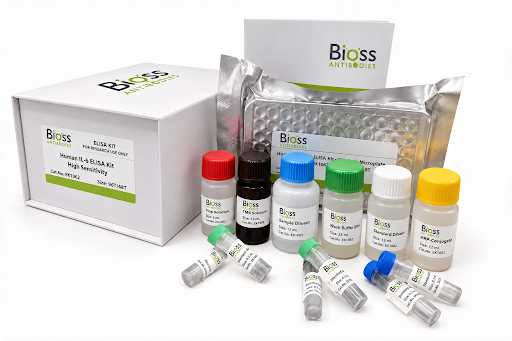
Due to the possibility of mismatching between antigens from other origin and antibodies used in our kits (e.g., antibody targets conformational epitope rather than linear epitope), some native or recombinant proteins from other manufacturers may not be recognized by our products.
Principle of the Assay
The test principle applied in this kit is Sandwich enzyme immunoassay. The microtiter plate provided in this kit has been pre-coated with an antibody specific to Human CX3CR1. Standards or samples are added to the appropriate microtiter plate wells then with a biotin-conjugated antibody specific to Human CX3CR1. Next, Avidin conjugated to Horseradish Peroxidase (HRP) is added to each microplate well and incubated. After TMB substrate solution is added, only those wells that contain Human CX3CR1, biotin-conjugated antibody and enzyme-conjugated Avidin will exhibit a change in color. The enzyme-substrate reaction is terminated by the addition of sulphuric acid solution and the color change is measured spectrophotometrically at a wavelength of 450nm ± 10nm. The concentration of Human CX3CR1 in the samples is then determined by comparing the OD of the samples to the standard curve.
For use with: tissue homogenates, cell lysates, and other biological fluids.
For Research Use Only. Not for use in diagnostic procedures.
Target Information
Receptor for the C-X3-C chemokine fractalkine (CX3CL1) present on many early leukocyte cells; CX3CR1-CX3CL1 signaling exerts distinct functions in different tissue compartments, such as immune response, inflammation, cell adhesion and chemotaxis (PubMed:9390561, PubMed:9782118, PubMed:12055230, PubMed:23125415). CX3CR1-CX3CL1 signaling mediates cell migratory functions (By similarity). Responsible for the recruitment of natural killer (NK) cells to inflamed tissues (By similarity). Acts as a regulator of inflammation process leading to atherogenesis by mediating macrophage and monocyte recruitment to inflamed atherosclerotic plaques, promoting cell survival (By similarity). Involved in airway inflammation by promoting interleukin 2-producing T helper (Th2) cell survival in inflamed lung (By similarity). Involved in the migration of circulating monocytes to non-inflamed tissues, where they differentiate into macrophages and dendritic cells (By similarity). Acts as a negative regulator of angiogenesis, probably by promoting macrophage chemotaxis (PubMed:14581400, PubMed:18971423). Plays a key role in brain microglia by regulating inflammatory response in the central nervous system (CNS) and regulating synapse maturation (By similarity). Required to restrain the microglial inflammatory response in the CNS and the resulting parenchymal damage in response to pathological stimuli (By similarity). Involved in brain development by participating in synaptic pruning, a natural process during which brain microglia eliminates extra synapses during postnatal development (By similarity). Synaptic pruning by microglia is required to promote the maturation of circuit connectivity during brain development (By similarity). Acts as an important regulator of the gut microbiota by controlling immunity to intestinal bacteria and fungi (By similarity). Expressed in lamina propria dendritic cells in the small intestine, which form transepithelial dendrites capable of taking up bacteria in order to provide defense against pathogenic bacteria (By similarity). Required to initiate innate and adaptive immune responses against dissemination of commensal fungi (mycobiota) component of the gut: expressed in mononuclear phagocytes (MNPs) and acts by promoting induction of antifungal IgG antibodies response to confer protection against disseminated C.albicans or C.auris infection (PubMed:29326275). Also acts as a receptor for C-C motif chemokine CCL26, inducing cell chemotaxis (PubMed:20974991).
| GENE ID | 1524 |
| SWISS PROT | P49238 |
| SYNONYMS | CCRL1; CMKBRL1; CMKDR1; GPR13; GPRV28; V28; Beta chemokine receptor-like 1; Fractalkine receptor; G-protein coupled receptor 13 |
Materials Supplied
| Kit Components | 96 Wells Quantity/Size |
|---|---|
| Pre-Coated Microplate | 48T: 6 strips x 8 wells; 96T: 12 strips x 8 wells |
| Standard (Lyophilized) | 48T: 1 vial; 96T: 2 vials |
| Biotinylated Antibody (100×) | 48T: 60 μL; 96T: 120 μL |
| Streptavidin-HRP (100×) | 48T: 60 μL; 96T: 120 μL |
| Standard/Sample Diluent Buffer | 48T: 10 mL; 96T: 20 mL |
| Biotinylated Antibody Diluent | 48T: 6 mL; 96T: 12 mL |
| HRP Diluent | 48T: 6 mL; 96T: 12 mL |
| Wash Buffer (25×) | 48T: 10 mL; 96T: 20 mL |
| TMB Substrate Solution | 48T: 6 mL; 96T: 10 mL |
| Stop Reagent | 48T: 3 mL; 96T: 6 mL |
| Plate Covers | 48T: 1 piece; 96T: 2 pieces |
Storage
| Storage | *If the kit is opened, Store the whole kit at 4°C. If the kit is not used up in 1 week. Store the Pre-Coated Microplate, Standard ,Biotinylated Antibody and Streptavidin-HRP at -20°C, the rest reagents at 4°C, please used up within 6 months. *If the kit is not opened, store the whole kit: 4°C(short time storage, valid for 6 months); -20°C (long-term storage, valid for 1 year). Avoid repeated freeze-thaw cycles. |
Performance Characteristics
| REPEATABILITY | Intra-assay Precision (Precision within an assay):CV% < 8% Three samples of known concentration were tested twenty times on 1 plate to assess intra-assay precision. Inter-assay Precision (precision between assays):CV% < 10% Three samples of known concentration were tested in forty separate assays to assess inter-assay precision. |
| SENSITIVITY | The minimum detectable dose was 0.052ng/mL. |
| ASSAY RANGE | 0.16–10ng/mL |
| SPECIFICITY | This assay has high sensitivity and excellent specificity for detection of Human CX3CR1. No significant cross-reactivity or interference between Human CX3CR1 and analogues was observed. |
Frequently asked questions
What is Human Chemokine C-X3-C-Motif Receptor 1 (CX3CR1) ELISA Kit (BSKH73433) used for?
Human Chemokine C-X3-C-Motif Receptor 1 (CX3CR1) ELISA Kit is used for Sandwich Elisa.
Which species does Human Chemokine C-X3-C-Motif Receptor 1 (CX3CR1) ELISA Kit (BSKH73433) detect?
BSKH73433 is designed for Human samples.