
Mouse CD5 Antigen Like Protein (CD5L) ELISA Kit

Due to the possibility of mismatching between antigens from other origin and antibodies used in our kits (e.g., antibody targets conformational epitope rather than linear epitope), some native or recombinant proteins from other manufacturers may not be recognized by our products.
Principle of the Assay
The test principle applied in this kit is Sandwich enzyme immunoassay. The microtiter plate provided in this kit has been pre-coated with an antibody specific to Mouse CD5L. Standards or samples are added to the appropriate microtiter plate wells then with a biotin-conjugated antibody specific to Mouse CD5L. Next, Avidin conjugated to Horseradish Peroxidase (HRP) is added to each microplate well and incubated. After TMB substrate solution is added, only those wells that contain Mouse CD5L, biotin-conjugated antibody and enzyme-conjugated Avidin will exhibit a change in color. The enzyme-substrate reaction is terminated by the addition of sulphuric acid solution and the color change is measured spectrophotometrically at a wavelength of 450nm ± 10nm. The concentration of Mouse CD5L in the samples is then determined by comparing the OD of the samples to the standard curve.
For use with: Serum, plasma, and other biological fluids.
For Research Use Only. Not for use in diagnostic procedures.
Target Information
Secreted protein that acts as a key regulator of lipid synthesis: mainly expressed by macrophages in lymphoid and inflamed tissues and regulates mechanisms in inflammatory responses, such as infection or atherosclerosis (PubMed:26048980). Able to inhibit lipid droplet size in adipocytes (PubMed:20519120, PubMed:22579686). Following incorporation into mature adipocytes via CD36-mediated endocytosis, associates with cytosolic FASN, inhibiting fatty acid synthase activity and leading to lipolysis, the degradation of triacylglycerols into glycerol and free fatty acids (FFA) (PubMed:20519120). CD5L-induced lipolysis occurs with progression of obesity: participates in obesity-associated inflammation following recruitment of inflammatory macrophages into adipose tissues, a cause of insulin resistance and obesity-related metabolic disease (PubMed:21730133). Regulation of intracellular lipids mediated by CD5L has a direct effect on transcription regulation mediated by nuclear receptors ROR-gamma (RORC) (PubMed:22579686, PubMed:26607793). Acts as a key regulator of metabolic switch in T-helper Th17 cells (PubMed:26607794, PubMed:26607793). Regulates the expression of pro-inflammatory genes in Th17 cells by altering the lipid content and limiting synthesis of cholesterol ligand of RORC, the master transcription factor of Th17-cell differentiation (PubMed:26607793). CD5L is mainly present in non-pathogenic Th17 cells, where it decreases the content of polyunsaturated fatty acyls (PUFA), affecting two metabolic proteins MSMO1 and CYP51A1, which synthesize ligands of RORC, limiting RORC activity and expression of pro-inflammatory genes (PubMed:26607793). Participates in obesity-associated autoimmunity via its association with IgM, interfering with the binding of IgM to Fcalpha/mu receptor and enhancing the development of long-lived plasma cells that produce high-affinity IgG autoantibodies (PubMed:23562157). Also acts as an inhibitor of apoptosis in macrophages: promotes macrophage survival from the apoptotic effects of oxidized lipids in case of atherosclerosis (PubMed:9892623, PubMed:16054063). Involved in early response to microbial infection against various pathogens by acting as a pattern recognition receptor and by promoting autophagy (By similarity).
| GENE ID | 11801 |
| SWISS PROT | Q9QWK4 |
| SYNONYMS | API6; CT-2; SP-ALPHA; Spalpha; Apoptosis Inhibitor 6; Scavenger Receptor Cysteine Rich Family; IgM-associated peptide |
Materials Supplied
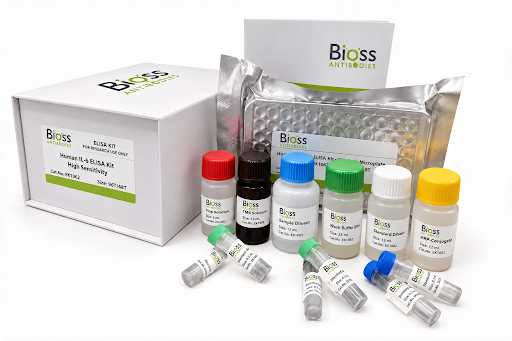
| Kit Components | 96 Wells Quantity/Size |
|---|---|
| Pre-Coated Microplate | 48T: 6 strips x 8 wells; 96T: 12 strips x 8 wells |
| Standard (Lyophilized) | 48T: 1 vial; 96T: 2 vials |
| Biotinylated Antibody (100×) | 48T: 60 μL; 96T: 120 μL |
| Streptavidin-HRP (100×) | 48T: 60 μL; 96T: 120 μL |
| Standard/Sample Diluent Buffer | 48T: 10 mL; 96T: 20 mL |
| Biotinylated Antibody Diluent | 48T: 6 mL; 96T: 12 mL |
| HRP Diluent | 48T: 6 mL; 96T: 12 mL |
| Wash Buffer (25×) | 48T: 10 mL; 96T: 20 mL |
| TMB Substrate Solution | 48T: 6 mL; 96T: 10 mL |
| Stop Reagent | 48T: 3 mL; 96T: 6 mL |
| Plate Covers | 48T: 1 piece; 96T: 2 pieces |
Storage
| Storage | *If the kit is opened, Store the whole kit at 4°C. If the kit is not used up in 1 week. Store the Pre-Coated Microplate, Standard ,Biotinylated Antibody and Streptavidin-HRP at -20°C, the rest reagents at 4°C, please used up within 6 months. *If the kit is not opened, store the whole kit: 4°C(short time storage, valid for 6 months); -20°C (long-term storage, valid for 1 year). Avoid repeated freeze-thaw cycles. |
Performance Characteristics
| REPEATABILITY | Intra-assay Precision (Precision within an assay):CV% < 8% Three samples of known concentration were tested twenty times on 1 plate to assess intra-assay precision. Inter-assay Precision (precision between assays):CV% < 10% Three samples of known concentration were tested in forty separate assays to assess inter-assay precision. |
| SENSITIVITY | The minimum detectable dose was 0.135ng/mL. |
| ASSAY RANGE | 0.32–20ng/mL |
| SPECIFICITY | This assay has high sensitivity and excellent specificity for detection of Mouse CD5L. No significant cross-reactivity or interference between Mouse CD5L and analogues was observed. |
Frequently asked questions
What is Mouse CD5 Antigen Like Protein (CD5L) ELISA Kit (BSKM71614) used for?
Mouse CD5 Antigen Like Protein (CD5L) ELISA Kit is used for Sandwich Elisa.
Which species does Mouse CD5 Antigen Like Protein (CD5L) ELISA Kit (BSKM71614) detect?
BSKM71614 is designed for Mouse samples.