
Rat HLA-B Associated Transcript 3 (BAT3) ELISA Kit
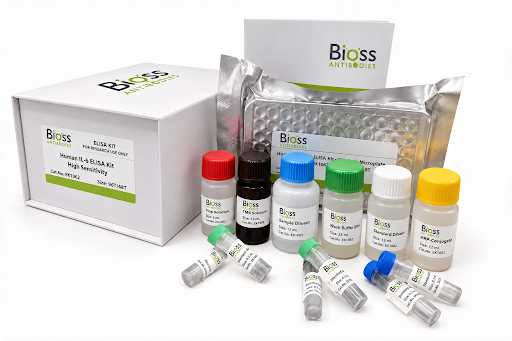
Due to the possibility of mismatching between antigens from other origin and antibodies used in our kits (e.g., antibody targets conformational epitope rather than linear epitope), some native or recombinant proteins from other manufacturers may not be recognized by our products.
Principle of the Assay
The microtiter plate provided in this kit has been pre-coated with an antibody specific to BAT3. Standards or samples are then added to the appropriate microtiter plate wells with a biotin-conjugated antibody preparation specific to BAT3. Next, Avidin conjugated to Horseradish Peroxidase (HRP) is added to each microplate well and incubated. After the TMB substrate solution is added, only those wells that contain BAT3, biotin-conjugated antibody, and enzyme-conjugated Avidin will exhibit a change in color. The enzyme-substrate reaction is terminated by the addition of sulphuric acid solution, and the color change is measured spectrophotometrically at a wavelength of 450nm ± 10nm. The concentration of BAT3 in the samples is then determined by comparing the O.D. of the samples to the standard curve.
For use with: Tissue homogenates, Cell lysates, and Other biological fluids.
For Research Use Only. Not for use in diagnostic procedures.
Target Information
ATP-independent molecular chaperone preventing the aggregation of misfolded and hydrophobic patches-containing proteins. Functions as part of a cytosolic protein quality control complex, the BAG6/BAT3 complex, which maintains these client proteins in a soluble state and participates in their proper delivery to the endoplasmic reticulum or alternatively can promote their sorting to the proteasome where they undergo degradation. The BAG6/BAT3 complex is involved in the post-translational delivery of tail-anchored/type II transmembrane proteins to the endoplasmic reticulum membrane. Recruited to ribosomes, it interacts with the transmembrane region of newly synthesized tail-anchored proteins and together with SGTA and ASNA1 mediates their delivery to the endoplasmic reticulum. Client proteins that cannot be properly delivered to the endoplasmic reticulum are ubiquitinated by RNF126, an E3 ubiquitin-protein ligase associated with BAG6 and are sorted to the proteasome. SGTA which prevents the recruitment of RNF126 to BAG6 may negatively regulate the ubiquitination and the proteasomal degradation of client proteins. Similarly, the BAG6/BAT3 complex also functions as a sorting platform for proteins of the secretory pathway that are mislocalized to the cytosol either delivering them to the proteasome for degradation or to the endoplasmic reticulum. The BAG6/BAT3 complex also plays a role in the endoplasmic reticulum-associated degradation (ERAD), a quality control mechanism that eliminates unwanted proteins of the endoplasmic reticulum through their retrotranslocation to the cytosol and their targeting to the proteasome. It maintains these retrotranslocated proteins in an unfolded yet soluble state condition in the cytosol to ensure their proper delivery to the proteasome. BAG6 is also required for selective ubiquitin-mediated degradation of defective nascent chain polypeptides by the proteasome. In this context, it may participate in the production of antigenic peptides and play a role in antigen presentation in immune response. BAG6 is also involved in endoplasmic reticulum stress-induced pre-emptive quality control, a mechanism that selectively attenuates the translocation of newly synthesized proteins into the endoplasmic reticulum and reroutes them to the cytosol for proteasomal degradation. BAG6 may ensure the proper degradation of these proteins and thereby protects the endoplasmic reticulum from protein overload upon stress. By inhibiting the polyubiquitination and subsequent proteasomal degradation of HSPA2 it may also play a role in the assembly of the synaptonemal complex during spermatogenesis. Also positively regulates apoptosis by interacting with and stabilizing the proapoptotic factor AIFM1. By controlling the steady-state expression of the IGF1R receptor, indirectly regulates the insulin-like growth factor receptor signaling pathway.
| GENE ID | 94342 |
| SWISS PROT | Q6MG49 |
| SYNONYMS | BAG6; Protein G3; Protein Scythe; BCL2-associated athanogene 6; BAG family molecular chaperone regulator 6; Large proline-rich protein BAG6 |
Materials Supplied
| Kit Components | 96 Wells Quantity/Size |
|---|---|
| Pre-coated, ready-to-use 96-well strip plate | 1 plate |
| Plate sealer for 96 wells | 2 |
| Standard | 2 tubes |
| Diluent buffer | 1 bottle |
| Detection Reagent A | 1 bottle |
| Detection Reagent B | 1 bottle |
| TMB Substrate | 1 tube |
| Stop Solution | 1 tube |
| Wash Buffer (30X concentrate) | 1 tube |
| Product data sheet | 1 copy |
Storage
| Storage | The TMB Substrate, Wash Buffer (30X concentrate), and the Stop Solution should be stored at 4°C upon receipt, while the other items should be stored at -20°C. |
Performance Characteristics
| REPEATABILITY | Intra-assay Precision (Precision within an assay): 3 samples with low, middle, and high-level BAT3 were tested 20 times on one plate, respectively. Inter-assay Precision (Precision between assays): 3 samples with low, middle, and high-level BAT3 were tested on 3 different plates, with 8 replicates in each plate. CV(%) = SD/meanX100 Intra-Assay: CV<10% Inter-Assay: CV<12% |
| SENSITIVITY | The minimum detectable dose was 0.068ng/mL. |
| ASSAY RANGE | 0.156–10ng/mL |
| SPECIFICITY | This assay has high sensitivity and excellent specificity for the detection of BAT3. No significant cross-reactivity or interference between BAT3 and analogs was observed. Note: Limited by current skills and knowledge, it is impossible to perform all possible cross-reactivity detection tests between BAT3 and all analogs, therefore, cross reactivity may still exist. |
Frequently asked questions
What is Rat HLA-B Associated Transcript 3 (BAT3) ELISA Kit (BSKR65636) used for?
Rat HLA-B Associated Transcript 3 (BAT3) ELISA Kit is used for Sandwich Elisa.
Which species does Rat HLA-B Associated Transcript 3 (BAT3) ELISA Kit (BSKR65636) detect?
BSKR65636 is designed for Rat samples.